Class B general building contractor license in California
Most people call this the general contractor license. A California Class B license covers building projects with two or more unrelated trades besides framing, and framing or carpentry jobs on their own. Here is what it lets you do, the experience CSLB accepts and the exams you take.
On this page11 sections
Class B license at a glance
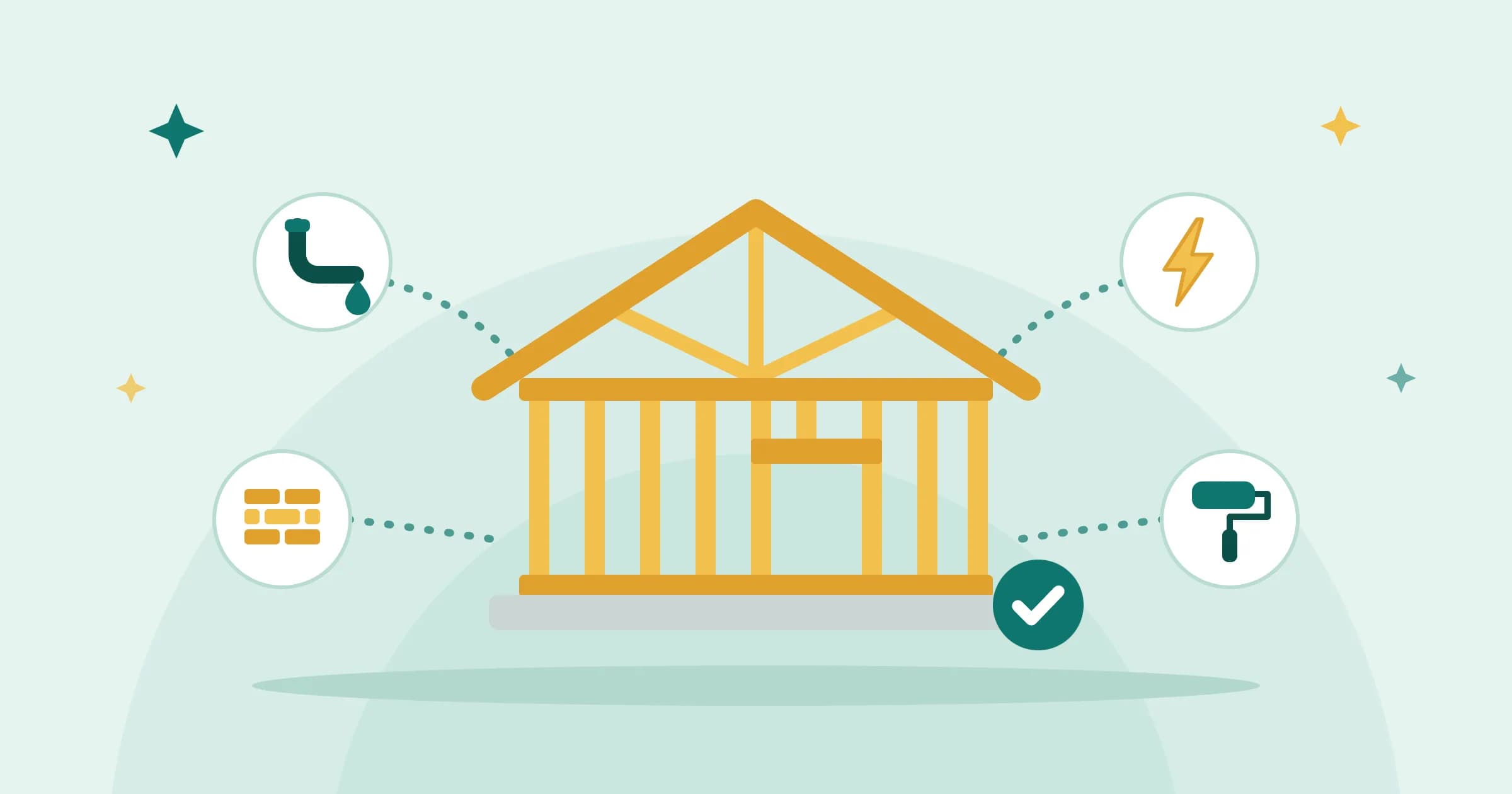
The Class B General Building license lets you contract for buildings and other structures in California, new or existing, residential or commercial. A B contract usually needs at least two unrelated building trades, not counting framing or carpentry. A B contractor can also take a framing or carpentry job on its own. The exceptions for single-trade jobs are below.
To qualify, you need 4 years of journey-level experience in the last 10 years and must pass two exams: Law & Business and the Class B trade exam. CSLB says B is the most common contractor license in California.
What a Class B contractor can and can't do
A B contractor can run a building project that uses two or more unrelated trades. You can do the work with your own crew, hire licensed subcontractors, or both. Framing and carpentry don't count toward the two trades, but you can take a framing or carpentry job by itself.
The limits are about single-trade work:
- A single-trade job as the prime contractor. You can take it only if you hold that trade's license or hire a contractor licensed in that trade to do the work.
- A single-trade job as a subcontractor. You need that trade's license yourself.
- Fire protection systems and well drilling. You need the C‑16 or C‑57 license, or a subcontractor who holds it.
- Asbestos abatement. You need the C‑22 license or CSLB's asbestos certification with DOSH registration, or a licensed subcontractor.
| Job | Can a Class B take it? |
|---|---|
| Framing a house or a deck, nothing else | Yes, as the prime contractor or a subcontractor |
| Kitchen remodel with plumbing, electrical, cabinets and tile | Yes. You can do the work yourself |
| New house, including the roof | Yes. The roof is part of the building project |
| Roof replacement only | As the prime contractor: with your own C‑39 license or by hiring a licensed C‑39 roofer. As a subcontractor: only with your own C‑39 license |
| Electrical work only, as a subcontractor | No, unless you also hold a C‑10 license |
| A building project that includes fire sprinklers | Yes, if a licensed C‑16 contractor installs the sprinklers or you hold C‑16 |
| Solar panels on a building | Yes. CSLB lets a B install a solar energy system on a structure |
For more examples, read CSLB's fact sheet What Jobs "B" General Building Can/Cannot Perform. If your job doesn't fit, ask CSLB at [email protected] before you sign the contract.
Class B, B‑2, A or a trade license: which fits your work
California sorts contractor licenses by the type of work, not by the size of the job. Compare your real work with each license before you apply.
| B General Building | B‑2 Residential Remodeling | A General Engineering | C license (one trade) | |
|---|---|---|---|---|
| What it covers | Any building or structure, new or existing, residential or commercial | Improvements to existing wood-frame homes | Engineered fixed works such as roads, sewers, pipelines, grading and paving | One trade, such as C‑10 Electrical or C‑36 Plumbing |
| Trades in one contract | Two or more unrelated, not counting framing or carpentry; or framing or carpentry alone | Three or more unrelated | — | Your trade |
| Structural work | Yes | No changes to load-bearing walls, foundations or other load-bearing parts | — | Within your trade |
| Exam in Spanish | Yes | No | No | Some, such as C‑36 and C‑39 |
Which one to look at:
- You framed and also did other trades on the same jobs, such as concrete, drywall or roofing. Class B fits.
- You remodel existing wood-frame homes without structural work. B‑2 may fit if each contract has three or more unrelated trades. To install, replace or extend electrical, plumbing or HVAC systems, a B‑2 needs that trade's license or a licensed subcontractor. A B needs structural framing experience.
- You worked mostly in one trade, such as tile, electrical or plumbing. Look at that trade's C license, such as C‑54 Tile, C‑10 Electrical or C‑36 Plumbing. Experience in one trade usually qualifies you for that trade's license.
- Your work is plumbing and HVAC, without framing. Look at C‑36 or C‑20. Two mechanical trades alone don't show the framing experience CSLB expects for B.
- You supervised building jobs. It counts if you had journeyman-level skills and directly supervised the construction work on site. Describe the trade work you oversaw, not office tasks.
Holding a B‑2 does not lead to a B. To get a B later, you need experience that qualifies for B, including framing.
Experience CSLB accepts for Class B
You need at least 4 years of experience in the last 10 years. It counts only at journey level or above: as a journeyman, foreman, supervising employee, contractor or owner-builder. A journeyman is a fully qualified worker who can do the trade without supervision, not a trainee, helper or laborer.
What CSLB expects for B. CSLB looks for structural framing or rough carpentry plus other unrelated trades. Its list of acceptable documents says that permits you send for B work should show the project's square footage and support framing or rough carpentry plus at least two other unrelated trades. Each permitted job must include two unrelated trades besides framing, but not every job has to include framing.
Describe the work, not the title. In its licensing workshop slides, CSLB shows this as a good description of B experience: "rough and finish carpentry, concrete forming and pours, roughout plumbing and electrical, interior/exterior painting and flooring on residential homes." It marks "Residential general building trades" as unacceptable because it says nothing about what you did. CSLB also warns not to copy its examples: describe your own work.
Building your own home. Owner-builder experience counts only for Class B. You fill out a separate project form for each project, and the work must be verifiable through building permits and final inspections.
Education and apprenticeship. CSLB may credit up to 3 years for a related degree, technical training or a completed apprenticeship. At least one year must still be practical experience. A four-year degree in architecture counts only toward Class B. The apprenticeship period can't overlap the journey-level years you claim.
Part-time work. Claim only the time you actually spent in B work. CSLB's example: six years of half-time work count as three years.
See CSLB's page Qualifying Experience for the Examination.
Who can sign your experience, and how CSLB checks it
You report your experience on CSLB's Certification of Work Experience form. You fill in Part 1. Then the person who confirms your work fills in all of Part 2 and signs it. Use a separate form for each employer or work setting.
Who can sign. CSLB lists an employer, contractor, foreman or supervisor, coworker, another journeyman, union representative, building inspector, architect, engineer or homeowner. The person doesn't need a contractor license. They must know your work firsthand for the dates they confirm, not from what others told them. They must be able to confirm that you worked at journey level or above. Both of you must be at least 18. The signer signs under penalty of perjury, with an original signature.
How CSLB checks. By law, CSLB randomly reviews at least 3% of applications. That is a minimum, not a limit. CSLB can ask any applicant for proof, such as pay stubs, tax forms, permits or contracts, and can contact the person who signed. If you can't support the experience, CSLB can return or void your application or deny the license.
Why it matters. CSLB says nearly half of all applications it receives are inaccurate or incomplete. A returned application delays your license. Knowingly submitting false or forged documents is a felony. A licensed contractor who certifies false or misleading experience can be disciplined.
Experience from another country
Work you did outside the United States can count toward your B experience. The rules are the same: 4 years at journey level or above in the last 10 years, in the kind of work a B does. CSLB's list of acceptable documents includes certifications signed in other countries.
Your experience form. If you worked for a contractor abroad, CSLB's list includes a Certification of Work Experience written in English or translated into English and notarized in the country where you worked. The person who signs must know your work firsthand, such as your employer, supervisor or a coworker.
More proof CSLB may ask for. For work as an employee, the list includes pay and tax records, your employer's contact information and a description of your duties. CSLB may contact the person who signed, so give a phone number and email that still work.
If you ran your own business abroad. For self-employment, CSLB's list includes tax documents, contracts, invoices, permits and receipts. Our advice: if a document is not in English, attach an English translation so CSLB can check it.
A degree from another country. A related degree can count for part of your experience, up to 3 years. How much depends on the degree. Have it evaluated by an accredited evaluation service that works in the United States, and translated into English if it is in another language. Send the official transcript sealed from the school.
Other things to know if you came from abroad:
- The application asks for a Social Security number. If you don't have one, you can use an ITIN (Individual Taxpayer Identification Number).
- At the PSI test center, a valid, unexpired passport from any government is accepted as ID. The name on it must match your application.
- If you live outside California when you apply, you can send fingerprints on CSLB's paper fingerprint cards.
- You take the Class B trade exam in person in California or Oregon. Law & Business can also be taken at PSI centers in other states.
CSLB's reciprocity covers only some U.S. states, so a license from another country doesn't let you skip the exams. CSLB decides whether your foreign experience qualifies, so describe each job in detail.
The two exams for a Class B license
Most first-time applicants take two exams at a PSI test center: Law & Business and the Class B trade exam. Each one is closed book, with 3.5 hours and a calculator provided. Each question has four answer choices, and wrong answers don't cost extra points.
The Class B exam covers five areas: Planning and Estimating, Framing and Structural Components, Core Trades, Finish Trades, and Safety. See how much each area counts and try sample questions on our free Class B practice test.
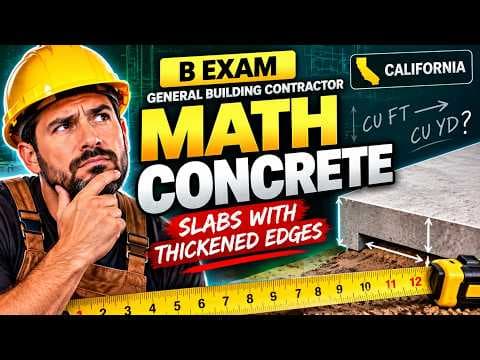
Plans and math. CSLB says most of its exams include questions about blueprints or drawings in a separate booklet, and its Class B guide says some questions require calculations. People who took the Class B exam describe a set of plan sheets and questions that ask you to read dimensions and quantities from them. They also say formulas aren't given, so practice calculations such as concrete volume in cubic yards.
In Spanish. CSLB offers the Class B exam in Spanish. On the Spanish exam, you can switch a question to its English original. Test2Pro works in Spanish too, and practice questions can be shown in 8 languages.
For how to use CSLB's study guide, what to read and how many questions people report, see CSLB study guides: what's inside and how to use them.
Adding Class B to a license you already have
If you already hold a C license, you can add B instead of applying for a new license. Your license needs a qualifier for B: the person who meets the B experience and exam rules. It can be your current qualifier or someone new.
- Keep your license current. CSLB adds a classification only to a renewed, current license.
- Apply for an additional classification. Use CSLB's application for additional classification. Your qualifier needs 4 years of B experience in the last 10 years, with Certification of Work Experience forms. Owner-builder experience can count here too.
- Take the Class B exam. If your qualifier hasn't passed Law & Business, CSLB will require it too.
- B needs its own application. You can't add B together with another class on one application.
- Exam waiver. CSLB may add B without the exam if, for 5 of the last 7 years, your qualifier was listed on an active license in good standing and actively worked in that business's construction. CSLB must also find B closely related to the classes your license holds. The waiver doesn't apply if your license holds only C‑61 limited specialty classes. CSLB decides.
See CSLB's Add a Classification page.
Class B myths and facts
| You may hear | What CSLB rules say |
|---|---|
| "You need 5 years of experience." | 4 years at journey level or above in the last 10 years. |
| "A B job needs three trades plus framing." | Two or more unrelated trades, not counting framing or carpentry. Framing or carpentry alone is also allowed. |
| "Only a Class B holder can sign your experience." | A qualified person who knows your work firsthand, such as a coworker or homeowner, and can confirm you worked at journey level. |
| "B is only for houses." | B covers buildings of any kind, homes and commercial buildings alike. |
| "B‑2 is a handyman license." | B‑2 is for remodeling existing homes, and each contract needs three or more unrelated trades. |
| "A NASCLA exam replaces the California exam." | Not by itself. Passing it can waive only the B trade exam. You must also have been the qualifier on an equivalent general building license in another state, in good standing, for at least the past 5 years. It does not replace Law & Business. |
| "CSLB checks only 3% of applications." | At least 3% are checked at random, and CSLB can ask any applicant for proof. |
Class B license questions
Is a general contractor license the same as a Class B?
For buildings, yes. In California, "general contractor" usually means the B General Building license. There is also an A General Engineering license for roads, utilities and other engineered works, and a B‑2 license for remodeling homes.
Can a Class B contractor do plumbing or electrical work?
Yes, if your own contract includes two or more unrelated trades besides framing or carpentry. Other trades on the same project don't count if they aren't in your contract. For a plumbing-only or electrical-only job, you need that trade's license. As the prime contractor, you can instead hire a subcontractor licensed in that trade.
Can I get a Class B without framing experience?
Usually not. CSLB expects B experience to include structural framing or rough carpentry. If your experience is home remodeling without structural work, look at B‑2.
Do I need a license for small jobs?
You need no license only if the whole job is under $1,000 for labor, materials and everything else, is minor work that needs no building permit, and you do it without employees. The job can't be part of a bigger project, and you can't split a bigger job into smaller contracts. If you advertise, the ad must say that you are not licensed.
Can I take the Class B exam in Spanish?
Yes. CSLB offers the Class B and Law & Business exams in Spanish. The B‑2 exam is not offered in Spanish.
Next steps
Take the free Class B practice test to see which exam areas you already know. To track your own application steps, use License Path in a free Test2Pro account.
Sources & checks
- CSLB, B – General Building Contractor classification
- CSLB, Fast Facts: What Jobs "B" General Building Can/Cannot Perform (04/2025)
- CSLB, B-2 – Residential Remodeling Contractor classification
- CSLB, Qualifying Experience for the Examination · checked Oct 29, 2026
- CSLB, Acceptable Supporting Experience Documentation
- CSLB, Certification of Work Experience (rev. 12/2024)
- CSLB, Application for Original Contractor License (rev. 01/2026)
- CSLB, Add a Classification
- CSLB, B General Building study guide (13E-B, 03/2026)
- CSLB, Examinations Frequently Asked Questions
- California Business and Professions Code §7057
- California Business and Professions Code §7057.5
- California Business and Professions Code §7048
- California Business and Professions Code §7027.2
- California Business and Professions Code §7065.3
- CSLB, Law and Business study guide
- CSLB: Before Applying for the Examination · checked Oct 29, 2026
- CSLB Examinations FAQ · checked Oct 24, 2026
- CSLB: Apply for a Sole Owner License · checked Oct 24, 2026